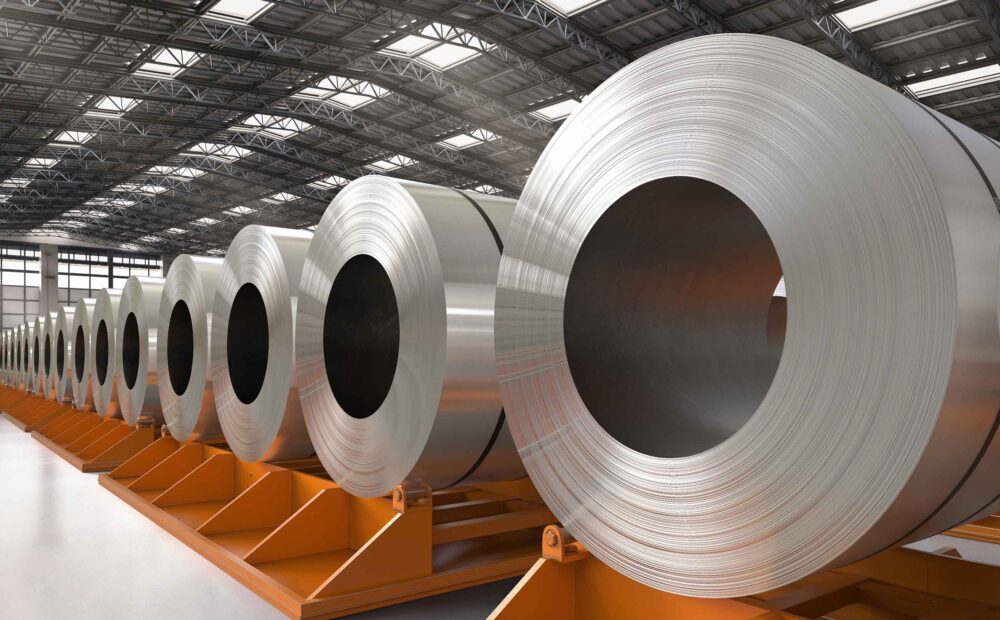
President Donald Trump has introduced a tariff incentive program aimed at encouraging companies to build, expand, and refurbish aluminum production facilities in the United States. The policy allows eligible companies to receive reduced aluminum import tariffs after gaining approval for domestic production plans. The move targets increased primary aluminum capacity and supports efforts to strengthen U.S. supply chains for a material considered important for economic activity and national defense.
Trump Introduces Tariff Incentive for U.S. Aluminum Production
President Donald Trump signed a proclamation establishing a program that allows companies investing in U.S. aluminum production facilities to qualify for lower import tariffs.
The current aluminum tariff under Section 232 of the Trade Expansion Act stands at 50%. Under the new incentive program, approved companies can receive a tariff reduction of half the applicable rate on a specific quantity of imported primary aluminum.
The tariff benefit applies to imports equivalent to the expected annual production volume of newly approved facilities. Companies must demonstrate plans to increase aluminum production capacity within the United States.
The proclamation states that creating an incentive program for companies investing in new primary aluminum production capacity is necessary and appropriate to encourage domestic expansion.
Policy Links Tariff Relief With Domestic Facility Investment
The new program connects tariff reductions with commitments to build, expand, or refurbish aluminum production facilities in the United States.
Companies seeking benefits must submit domestic production plans to the U.S. Department of Commerce. The department will review these plans before approving tariff reductions.
According to the proclamation, companies must commit to beginning construction activities by January 20, 2029. Eligible projects include new aluminum production facilities, expansion projects, and modernization efforts for existing plants.
The Commerce Department will assess factors such as commercial feasibility and expected annual aluminum production before approving applications.
Section 232 Provides Legal Basis for Aluminum Tariffs
The aluminum tariff program operates under Section 232 of the Trade Expansion Act. This law allows the president to restrict imports when they are considered a threat to U.S. national security.
The Trump administration previously used Section 232 authority to impose tariffs on several sectors, including steel, aluminum, automobiles, and automotive parts.
The current aluminum tariff structure has been used as part of broader efforts to address concerns about domestic production capacity.
In the latest proclamation, the administration stated that revising the aluminum tariff structure would encourage companies to increase primary aluminum production in the United States.
Commerce Department Will Manage Company Applications
Commerce Secretary Howard Lutnick will establish the incentive program and oversee the approval process for companies seeking reduced aluminum tariffs.
The Commerce Department may require companies to submit additional information and analysis during the review process.
Applications will be evaluated based on factors including:
- Commercial feasibility of the proposed investment plan
- Expected annual aluminum production from the facility
- Plans to build, expand, or refurbish U.S. aluminum production facilities
- Ability to begin construction within the required timeframe
- Information required to demonstrate compliance with program conditions
Once approved, companies can receive reduced tariff rates on imported primary aluminum volumes that match their projected annual production levels.
Domestic Aluminum Supply Drives Investment Incentive
The administration has stated that domestic primary aluminum production remains insufficient to meet demand.
President Trump highlighted aluminum as an important resource for the U.S. economy and defense industry. Commerce Secretary Howard Lutnick previously argued that primary aluminum is essential for the economy and defense industrial base.
Lutnick recommended incentives for companies that develop new aluminum production facilities, expand existing operations, or renovate older facilities to increase production capacity and improve efficiency.
The new tariff structure aims to encourage these types of investments.
Aluminum Production Facilities Could Receive Construction Commitments
The incentive program focuses on companies willing to invest in domestic aluminum production infrastructure.
Approved companies may pursue projects involving:
- Construction of new aluminum smelters
- Expansion of existing aluminum production facilities
- Refurbishment of older aluminum plants
- Improvements designed to increase production capacity or efficiency
The White House stated that the program would allow companies investing in building, expanding, or refurbishing aluminum smelters to qualify for lower tariff rates.
Companies must submit business plans outlining their proposed investments before receiving approval.
Program Builds on Previous Metals Investment Incentives
The aluminum tariff initiative follows earlier efforts by the Commerce Department to encourage metals production investment.
A previous program created incentives for steel and aluminum producers based in Canada and Mexico. That program provided tariff reductions in exchange for commitments to invest in domestic production.
Companies participating in earlier programs were required to provide information about raw material sources, project milestones, and compliance requirements.
The latest proclamation expands the approach by focusing on companies investing in U.S. aluminum production facilities.
Aluminum Supply Considerations Influence Policy Direction
The administration did not provide detailed reasons behind the timing of the proclamation. However, officials highlighted the importance of maintaining sufficient aluminum supplies for economic and defense-related needs.
The White House noted that aluminum supports the production of military systems, including armored vehicles, naval vessels, and missiles.
The policy comes as the administration seeks to encourage additional domestic production capacity for materials considered important to national security.
U.S. Aluminum Plant Construction Outlook
The tariff reduction program creates a framework for companies to receive trade benefits in exchange for commitments to increase aluminum production capacity in the United States.
The effectiveness of the program will depend on company investment decisions, Commerce Department approvals, and the implementation of proposed construction projects.
By linking tariff reductions with new and expanded aluminum facilities, the policy seeks to encourage domestic manufacturing investment while addressing concerns about aluminum supply availability. As companies evaluate potential projects, U.S. aluminum plant construction could become an important focus of future industrial investment.
Leave a Reply