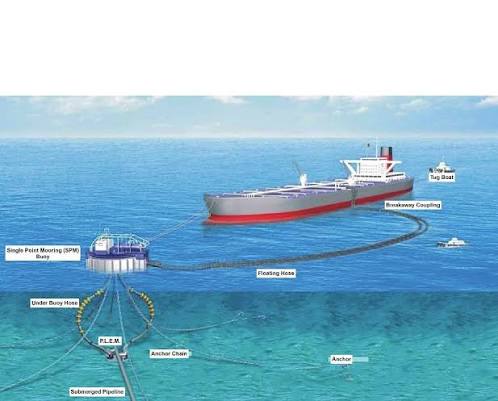
Construction has started on the Texas GulfLink deep-water export terminal, a multibillion-dollar energy infrastructure project in the Gulf of Mexico. Developed by Sentinel Midstream, the offshore facility will expand U.S. crude oil export capacity by allowing Very Large Crude Carriers to load directly offshore. The project combines new export infrastructure with technologies designed to improve loading efficiency while reducing emissions and is expected to begin operations in 2028.
Texas GulfLink Project Moves Into Construction
Sentinel Midstream, a Dallas-based energy infrastructure company, has begun construction of the Texas GulfLink deep-water export terminal approximately 30 miles off the coast of Brazoria County, west of Freeport, Texas.
The project follows financial support from the U.S.–Japan Trade Agreement and the Donald Trump administration. According to the U.S. Commerce Department, the U.S.–Japan Trade Agreement will contribute an estimated $2.1 billion, the project’s originally announced cost.
Construction began after Sentinel Midstream announced the funding on May 4.
Texas Continues Its Deep-Water Port Development
Texas has developed its deep-water port infrastructure for more than a century in response to changing trade demands.
Before 1845, ports including Galveston and Velasco primarily traded with New Orleans. By the mid-1800s, Galveston had become a major cotton export port serving Britain.
As ocean commerce and rail transportation expanded after the Civil War, larger vessels increased demand for deeper ports. The dredging of the Houston Ship Channel in 1914 and the development of what is now Port Houston established Houston as a major international shipping center.
In 2015, Texas Deepwater Partners launched a joint venture to develop a 988-acre multi-modal energy logistics terminal along the Houston Ship Channel to support liquid storage and transportation.
Deep-Water Terminal Designed for VLCC Loading
Offshore Loading System
Texas GulfLink will serve as a deep-water crude oil export terminal capable of loading Very Large Crude Carriers (VLCCs) directly offshore.
According to Sentinel Midstream, the terminal will handle up to two million barrels of crude oil per day when operational.
The company states that direct offshore loading will provide an alternative to reverse lightering, where several smaller tankers transport crude oil from shore to larger vessels anchored offshore.
Sentinel says direct loading will improve export efficiency while reducing emissions.
Project Timeline and Employment
The U.S. Maritime Administration granted Texas GulfLink its deep-water port license in January 2026, allowing the project to move forward.
According to the U.S. Transportation Department, the project is expected to create up to 720 construction and operational jobs.
Sentinel Midstream expects the terminal to begin operations in 2028.
Environmental Technology Included in the Design
Vapour Recovery System
A key feature of the terminal is its active vessel-based vapour recovery system that uses a dynamic-positioned support vessel.
According to Sentinel Midstream, this will be the first system of its kind in the United States.
During loading operations, the system will capture volatile organic compounds (VOCs) released from VLCCs and condense them into a marketable liquid product.
Sentinel states that the technology is expected to prevent up to 19,000 tons of VOCs, including hazardous air pollutants, from entering the atmosphere each year.
The company also says direct offshore loading will reduce emissions by approximately 86 percent compared with reverse lightering while easing congestion at nearshore ports.
Project Leadership Highlights Strategic Goals
Sentinel Midstream CEO Jeff Ballard described the project’s objectives.
“Texas GulfLink is about more than infrastructure, it is about unlocking the full potential of American energy.”
He added that the project creates a direct path from one of the world’s most liquid crude hubs to global markets while strengthening allies, improving trade dynamics, and reinforcing the United States as an energy supplier.
Commerce Secretary Howard Lutnick said the project will:
“reinforce America’s position as the world’s leading energy supplier.”
U.S. Transportation Secretary Sean Duffy stated that Texas GulfLink supports efforts to strengthen the domestic oil industry and positions American producers “in the driver’s seat.” He added that the project helps ensure global energy markets can rely on the United States rather than foreign adversaries for energy supplies.
Project Analysis
Texas GulfLink is designed to expand U.S. crude oil export capacity by enabling direct offshore loading of Very Large Crude Carriers. The project combines a deep-water export terminal with a vessel-based vapour recovery system and offshore loading infrastructure. According to Sentinel Midstream, these features will improve loading efficiency, reduce emissions associated with reverse lightering, and support access to international markets for U.S. crude oil producers.
Conclusion
Construction of the Texas GulfLink deep-water export terminal marks the next stage in the project’s development following its licensing and funding announcements. Located offshore in the Gulf of Mexico, the facility is designed to load up to two million barrels of crude oil per day directly onto Very Large Crude Carriers. With operations expected to begin in 2028, the project will add new export infrastructure, create jobs, and introduce new offshore loading and vapour recovery technologies to the U.S. energy sector.
Leave a Reply